

I should be upfront about something before this story starts: I am not a gearhead. I do not have a garage full of tools, I cannot rebuild an engine, and I have never turned a wrench without first watching three YouTube videos and calling a friend. Every modification and project on every rig I have owned has been completed with a combination of online research, patience, and access to people who actually know what they are doing.
That said, the vehicles I have chosen and built out have shaped almost every adventure I have had in the last decade. This is how the Jeep overlanding setup came to be, one rig at a time.
How It All Started: The Deer and the Camry
It started with a crash. I had purchased a 2010 Toyota Camry to replace the 1993 Camry that had carried me through college. Within the first year of owning the 2010, I totaled it on a back road while driving to visit family for a long weekend. A deer hit every panel on the passenger side of the car, from the front bumper straight through to the tail light. The car was still driveable, which is how I made it to my family’s place and back home several days later. But the insurance company ran the numbers and determined that replacing every panel down the right side of the car would cost more than the vehicle was worth. They totaled it and paid it off.


With a check in my pocket and a clear idea of what I did not want, I started looking for something completely different. The goal was a vehicle capable of going off-road, with real ground clearance, that could serve as a mobile base camp for hiking and backpacking. Something used, something with character, something that needed a little work but not a mechanical resurrection. After considerable research and a lot of list-making, I settled on a 1997 Jeep Cherokee.
The Beast: 1997 Jeep Cherokee
I named it The Beast. It earned the name quickly.
Getting it properly licensed turned into a months-long ordeal. When I went to transfer the title, it came back flagged with a lien still attached. The previous owners had paid the vehicle off, but the used car dealer they had purchased it from had since passed away and his dealership had closed. Resolving it required tracking down the dealer’s widow, who eventually provided the paperwork needed to clear the lien. After months of back and forth, The Beast was finally road legal.

Shortly after getting it sorted, life changed significantly. I was let go from my job and a combination of circumstances and opportunities lined up pointing toward a change of scenery. I loaded The Beast with as much as would fit, donated or got rid of the rest, and drove to Arizona with my dog Lilly in the passenger seat. We were starting over in the Southwest.
The first couple of years in Arizona produced some of the best adventures I have had. That spring I drove The Beast up to Utah for Outdoor Retailer, a massive trade show where outdoor gear brands unveil their new products for the season. I had secured a media pass as a blogger and came home with gear to test. Later that same summer I drove back through Utah and up to Idaho for the first Hell Hike and Raft adventure, a trip that involved backpacking into the Seven Devils Wilderness, descending into Hells Canyon, and rafting out on the river at the bottom. The Cherokee made the drive without complaint.

Eventually age caught up with it. The Beast started developing the kind of issues that come with a vehicle that is simply old and was not well maintained by its previous owner. With it serving as both daily driver and adventure rig, reliability mattered. I needed something more capable and more dependable. It was time to move on.
The Beast was not abandoned. It was renamed Betty White and passed along to a friend in Tucson who has put time, effort, and love into keeping it going ever since. The heart of it is still out there somewhere on Arizona roads.
The Red Baron: 2007 Jeep Wrangler
The replacement was a 2007 Jeep Wrangler that I named the Red Baron. It had one previous owner, a real estate agent in Tucson who had most likely never removed the soft top, engaged four-wheel drive, or taken it anywhere that required either. The interior looked showroom new. The engine was spotless. I was the first person to actually use it as a Jeep.

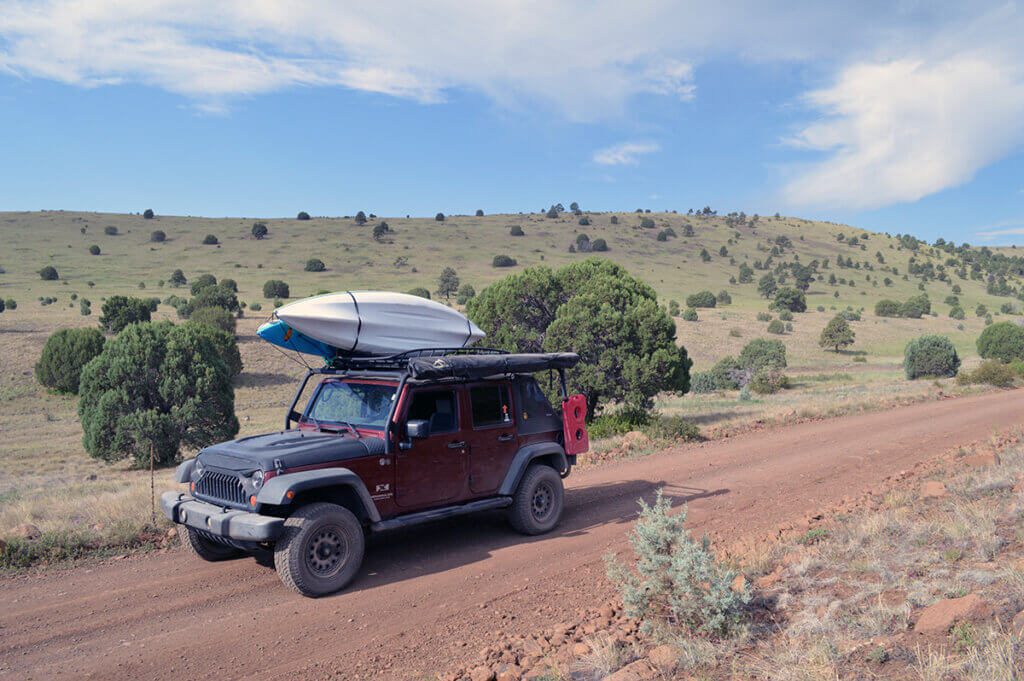

By the time I sold it, it looked nothing like that. Cross-country road trips, backroad explorations, camping all over the Southwest. I added a roof rack, an awning, replaced the suspension, and built out a sleeping system inside using a purpose-built air mattress designed for Jeep camping. When I eventually moved back to Illinois, I removed the rear seats, built a platform for sleeping and storage, and installed a rooftop tent on the rack.


The first camping trip with the completed interior was also the last. Shortly after getting home from that trip, I went to get the mail on an ordinary afternoon and the Wrangler did not want to start or run. I had it towed to a mechanic. The engine diagnosis was not good. Faced with significant repair costs and a high likelihood that other major components would follow, I made the call to let it go. It went to a couple of mechanics who work for the state a few hours away, people who had the tools and skills to bring it back. I did not.
That was the end of the Red Baron. And the end of this chapter of the story.
The next chapter covers what came after, and you can read it in Evolution of Adventure Rigs: The Ending, For Now. For more on the overlanding philosophy behind all of these rigs, take a look at what overlanding means and how I define it.
The story continues in Evolution of Adventure Rigs: The Ending, For Now if you want to see where it all landed. If you want to see the gear that goes in the rig, the Overlanding Gear section has what is actually used on trips. The newsletter is where I share the extra stuff: finds, trip notes, and rig updates that do not always make it to the blog. Subscribe on Substack if you want to follow along.


