
Orlando Wetlands Park – Christmas, Florida
A Pollution Fix That Became a Wildlife Sanctuary
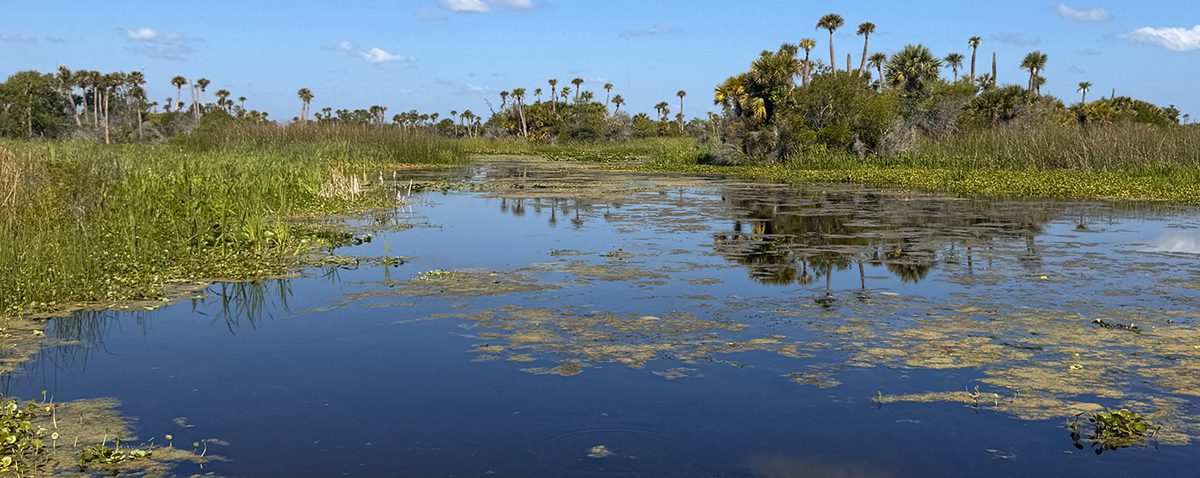
Orlando has a surprising amount of wild left in it, if you know where to look. Twenty miles east of the theme parks, past the suburban sprawl and just outside a town called Christmas, there is a stretch of water and marsh and cattail that feels nothing like the Florida most people come to see. This is Orlando Wetlands Park, and its existence is one of those accidental success stories that turns out to be exactly what it sounds like.
The park covers more than 1,600 acres. On any given morning you can walk its trails and boardwalk and find herons, ibis, roseate spoonbills, sandhill cranes, anhingas, and dozens of other species going about their routines with the kind of indifference that makes a place feel genuinely wild. Roughly 1,700 alligators call it home. More than 30 species on Florida’s threatened and endangered wildlife list have found a foothold here. Over 200 bird species have been recorded on the grounds.
What makes it stranger and better is how it came to exist. This place was not designed as a wildlife refuge. It was designed as a water treatment system, and the wildlife moved in on its own.
The land itself has been many things. Settlers arrived in the 1830s. The Army established Fort Christmas here in 1837 during the Second Seminole War. After the Civil War, farmers drained it for agriculture and by the 1940s a dairy was operating on the property. By the 1980s, Orlando’s population had grown large enough that the city’s water reclamation facility was discharging nitrogen-rich treated water into the Little Econlockhatchee River at levels that exceeded EPA limits. The city needed a solution.
That solution was to buy the old dairy land, excavate more than 1,200 acres of former pasture, and plant 2.3 million wetland plants including 200,000 trees. By 1987 it was operational. Today millions of gallons of reclaimed water travel daily from Orlando’s Iron Bridge water reclamation facility into the park, spend 30 to 40 days filtering through a series of constructed wetland cells, and exit into the St. Johns River measurably cleaner than when they arrived. The plants do the work. The wildlife arrived because the plants did the work, and because nature moves fast into any space that resembles what it used to be.
The boardwalk, trails, and observation areas are open to the public at no charge.
Know Before You Go
- Region: Southeast United States / Central Florida
- Location: Christmas, Florida — approximately 20 miles east of downtown Orlando
- Address: 25155 Wheeler Road, Christmas, FL 32709
- Coordinates: 28.5583° N, 81.0022° W
- Cost: Free
- Hours: Daily 7:00 a.m. to 6:00 p.m. (confirm seasonal variation before visiting)
- Trail: Multiple walking trails and a boardwalk through wetland cells; mostly flat, natural and paved surfaces
- Managed By: City of Orlando — Water Reclamation Division
- Attraction Type: Nature Park / Wildlife Sanctuary / Roadside Attraction
Early morning is the best time to visit for active wildlife and bird sightings. The park is open year-round but peak birding season runs roughly October through April. Bring water and sunscreen as shade is limited on the open trail sections. Mosquito repellent is strongly recommended in summer months.
My Visit
A Florida Morning with the Family
I visited Orlando Wetlands in April on a trip down to see my brother and his family. My mom made the drive with me, and the whole crew came out for the morning. My brother, my sister-in-law, the kids, all of us. We’d been moving through the trip with a loose plan. Airboats one day, wetlands the next, Castillo de San Marcos in St. Augustine after that. The kind of itinerary that works better as a direction than a schedule.
What You Walk Into
The park doesn’t announce itself dramatically. You park, you walk, and then you are in it. The boardwalk takes you out over the water and through stands of cattail and pickerelweed and the kind of thick green growth that Florida does effortlessly. The sounds change within a few minutes. Less road noise. More birds. The water sits flat and dark and you start noticing things in it and along the edges of it that you didn’t notice at first.
The Wildlife
We saw herons working the shallows with that slow-motion patience they have, moving one careful step at a time and then absolutely still. Ibis picking through the grass. Alligators doing what alligators do, which is mostly nothing at all. Sitting at the water’s edge or floating with just their eyes above the surface, watching everything and reacting to none of it. There were turtles on every log that stuck out of the water. Birds I didn’t recognize and had to look up later.
What the park does well is give you enough distance from the wildlife to watch it behave normally. The boardwalk and trail setbacks keep the human footprint small. Things were happening out there that would have been happening whether anyone showed up or not.
The Backstory Changes It
Knowing why the park exists makes walking it feel different. This isn’t a nature preserve that got set aside to stay natural. This is former dairy pasture that got excavated and replanted so the City of Orlando could avoid an EPA fine, and the result is a functional water treatment system that also happens to be one of the better wildlife experiences in Central Florida. That dissonance is worth sitting with. The plants filter the water. The wildlife followed the plants. The people come to watch the wildlife and have no particular connection to the water treatment happening a few feet below the surface of all of it.
Florida has no shortage of places that exist for reasons other than what they became. This one belongs on that list.
Worth the Morning
If you’re in the Orlando area and want an hour or two that has nothing to do with a theme park or a tourist strip, this is an easy answer. Take the drive out to Christmas. Walk the boardwalk. Watch something happen at a pace you can’t manufacture. It’s free, it’s genuinely good, and you’ll leave with more questions about Florida than you arrived with.


Orlando Wetlands is one of those places that does not look like much on a map but earns its time once you are standing in it. If you want more off-the-beaten-path stops from real visits, the Roadside Attractions section has them.
Poston Butte in Florence, Arizona is a free hike up a volcanic mound with a 14-foot masonry pyramid at the summit and 360-degree desert views that most people passing through the area have never heard of. Amboy Crater in California is a 79,000-year-old cinder cone volcano sitting alone in the Mojave Desert along Route 66, free to visit and worth every mile of the detour. Two Guns, Arizona is a dark-history ghost town with crumbling zoo ruins right off Route 66 that most people drive past without knowing it is there.
If you want to see everything in the Natural Areas section, the full list is here.
The newsletter is where I share the extra stuff: finds, trip notes, and places that do not always make it to the blog. Subscribe on Substack if you want to follow along.