
How often does everything go exactly as planned on a trip? In my experience, the answer is almost never. Weather changes, trails are mismarked, gear fails, and the unexpected shows up without advance notice. As an Eagle Scout, the training I started as a Cub Scout has pulled me out of more strange situations than I can count. These are the backpacking survival skills that have proven most useful, and that I think every hiker and backpacker should have at least a working knowledge of.
You do not need to have been a Scout to learn any of these. You just need to be willing to.
Eight Backpacking Survival Skills Every Hiker Should Know
1. Mindset and Attitude
This one sounds soft but it is not. In an emergency or an unexpected situation, your attitude determines what happens next more than any piece of gear you are carrying. Panic burns energy, clouds judgment, and makes everything worse. Staying calm, assessing the situation, and thinking before acting is a trainable skill and one of the most valuable backpacking survival skills on this list.
The Scouts call it being mentally prepared. It means staying sharp even when things go wrong, not freezing, and trusting your training and your instincts. The gear can only do so much. The person carrying it does the rest.
2. Basic First Aid
Knowing how to clean and bandage a wound, recognize and treat blisters, manage a sprain, create a field splint, and stabilize an injury until help can be reached is not optional when you are miles from the nearest road. Basic first aid is the difference between a manageable situation and a medical evacuation.
Many local gear shops offer free basic first aid training. For a more thorough foundation, Wilderness First Aid and Wilderness First Responder courses provide certifications that go well beyond standard first aid in terms of backcountry applicability. The Red Cross course locator is a good place to find options near you.
3. Fire Starting and Building
Fire is one of the most fundamental backpacking survival skills for a reason. It provides warmth, allows you to purify water by boiling, cooks food, and serves as a signal in an emergency. Knowing how to build and light a fire in different conditions, in wet weather, in wind, at altitude, with limited materials, is a completely different skill than lighting a campfire with dry wood and a lighter on a clear evening.
Practice building fires in different conditions before you need to do it in an emergency. Carry more than one fire starting method in your kit. A lighter, waterproof matches, and a ferro rod together weigh almost nothing and cover a wide range of scenarios. This fire building primer from Outdoor Project covers the fundamentals well.
4. Pioneering: Knots, Rope, and Basic Structures
Pioneering is one of the oldest skills in Scouting. It covers knots, lashings, rope work, and the ability to build basic structures from available materials. In practice this means knowing how to tie the knots that hold things together under load, rig a tarp shelter, lash poles into a stretcher frame, or construct a simple gear platform when you need one.
Rope and cord belong in every pack. Knowing what to do with them turns a pile of materials into solutions. This Scout knots reference covers the most essential knots with clear explanations of when each one is used.
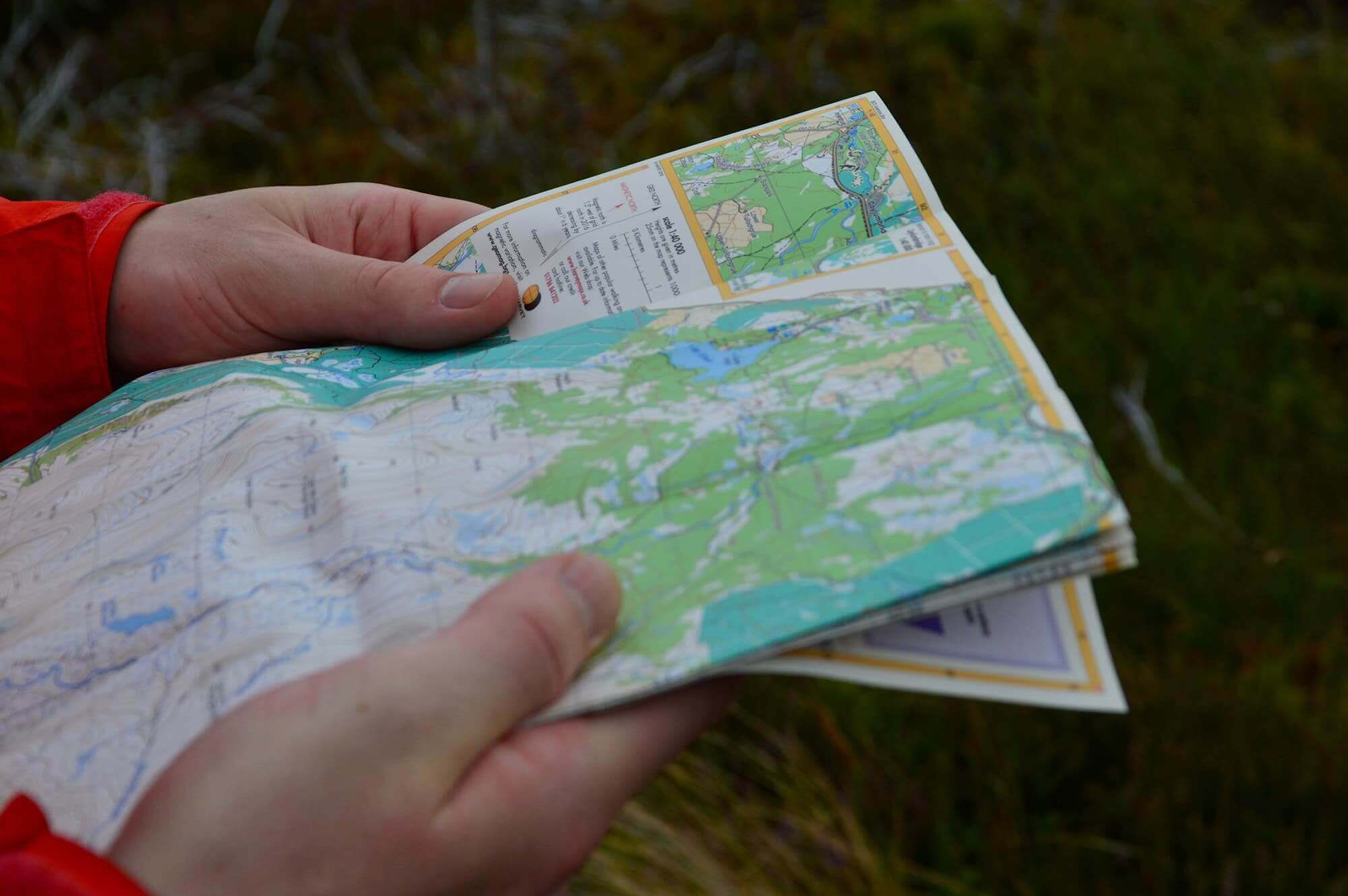
5. Orienteering: Map and Compass Navigation
Technology fails. Batteries die. GPS signals get blocked by terrain. Cell service disappears exactly when you need it. Knowing how to read a topographic map and use a compass to navigate is a backpacking survival skill that works regardless of battery level, signal strength, or software updates.
At minimum, know how to orient a map to your actual surroundings, take a bearing with a compass, and follow that bearing across terrain. Beyond that, knowing how to use the stars for navigation at night, and understanding how following water downhill leads to civilization in most environments, adds layers of capability that technology cannot replicate. American Hiking Society’s compass guide is a solid starting point.
6. Wildlife Awareness and Self Protection
You are not likely to need martial arts training on the trail, but you do need to know how to handle wildlife encounters. The core principle is making yourself known before an encounter happens: make noise, hike in groups, and be alert to signs of animal activity. When an encounter does happen, the response depends on the animal. Bears, mountain lions, and aggressive dogs all require different approaches.
For bears specifically, the general guidance is to stand your ground, appear large, speak in a calm firm voice, and back away slowly without turning your back. Carrying bear spray in areas where bears are active is worth the weight. Know how to use it before you go, not in the moment you need it.
7. Finding Food and Water
In an extended emergency situation, knowing how to locate and identify edible plants and find water sources becomes a genuine survival skill. The caveat here is significant: plants require local knowledge to identify safely, and a confident-looking berry is not always what it appears to be. Do not forage anything you cannot positively identify.
Water is the more immediately critical concern. Knowing how to locate sources, understanding that moving water is generally cleaner than standing water, and knowing that following a drainage downhill almost always leads to a larger water source are basics worth internalizing before you need them.
8. Water Filtration and Treatment
Most backpackers carry a water filter and that is the right call. But knowing why water treatment matters, and what to do when your filter fails, is equally important. In the United States, Giardia is present in a significant percentage of backcountry water sources, including streams that look perfectly clean. Drinking untreated water is a reliable way to spend several days wishing you had not.
Boiling is the most reliable purification method and requires no special equipment beyond a fire and something to boil water in. Chemical treatment tablets are a lightweight backup. Knowing the difference between a spring and a stream, and why springs tend to be safer, is useful local knowledge worth having before a trip rather than during one.
None of these backpacking survival skills require a Scouting background to learn. They require some time, some practice, and the willingness to take preparedness seriously. The backcountry rewards preparation and has very little patience for the alternative.
If you want more practical trail and backcountry prep guides, the Adventure Tips section has more. If you are looking for somewhere to put these skills to work, the Places section has trip reports from national forests, national monuments, and remote ghost towns where this stuff actually matters. The newsletter is where I share the extra stuff: finds, tips, and things that do not always make it to the blog. Subscribe on Substack if you want to follow along.


