

There are trips you take that stay with you longer than the photos do. My visit to Havasupai Falls in 2015 is one of those trips. I have been sitting on this story for a while, not because I forgot about it, but because some places are hard to put into words without making them sound smaller than they were.
Ten years ago I packed up the Jeep and drove eight hours north to a trailhead on the edge of the Havasupai Reservation. I was meeting up with a friend named Rozanne, who everyone called Mountain Matron, and her son. I had organized the first Hell Hike and Raft trip in Idaho back in 2014, and Rozanne was one of the bloggers who joined us out there. We stayed in touch after that, and when she had an extra slot on her Havasupai permit the following year, she invited me along.
The Drive to the Trailhead
The drive in alone was its own adventure. Sixty miles down Indian Reservation Road 18 in the dark, with signs warning that I would, not might, see elk and free range cattle. They were not exaggerating. A bull the size of a small car grazing a few feet off the road. A herd of twenty elk in a pasture I could not photograph fast enough. A black calf standing in the middle of the road that I nearly did not see until my brights caught it. I was driving well under the speed limit and it still did not feel slow enough.
I slept in the back of the Jeep that night at the trailhead, something that is no longer allowed, which is the first sign of how much has changed since then.
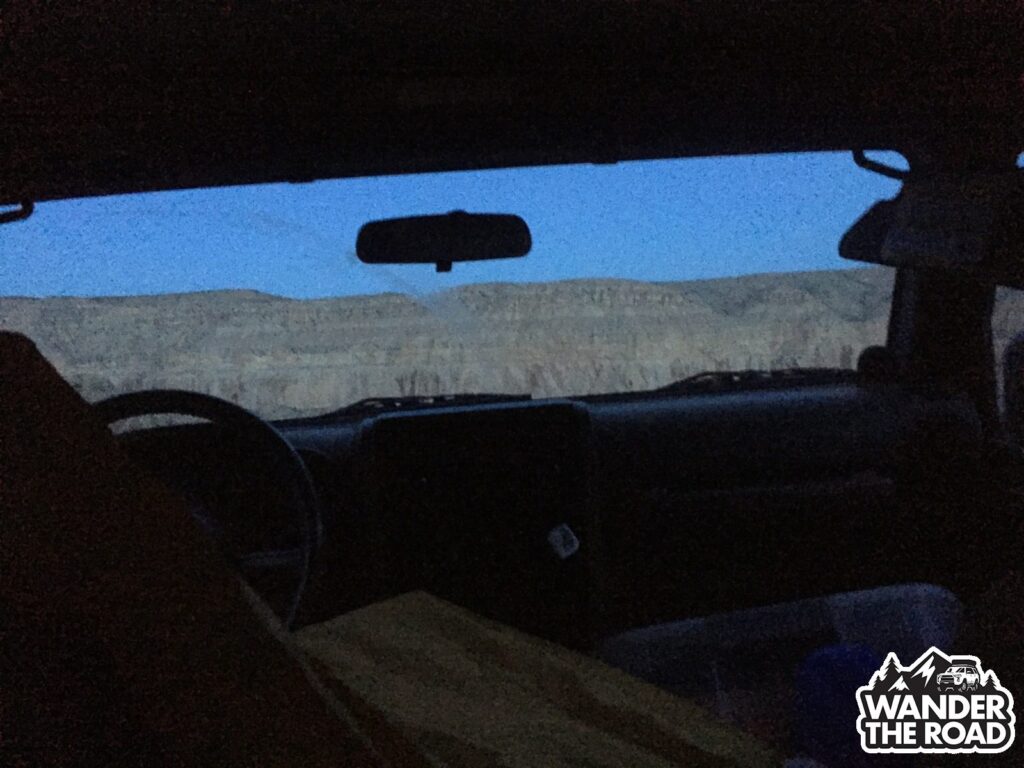
The Hike Down to Havasupai Falls
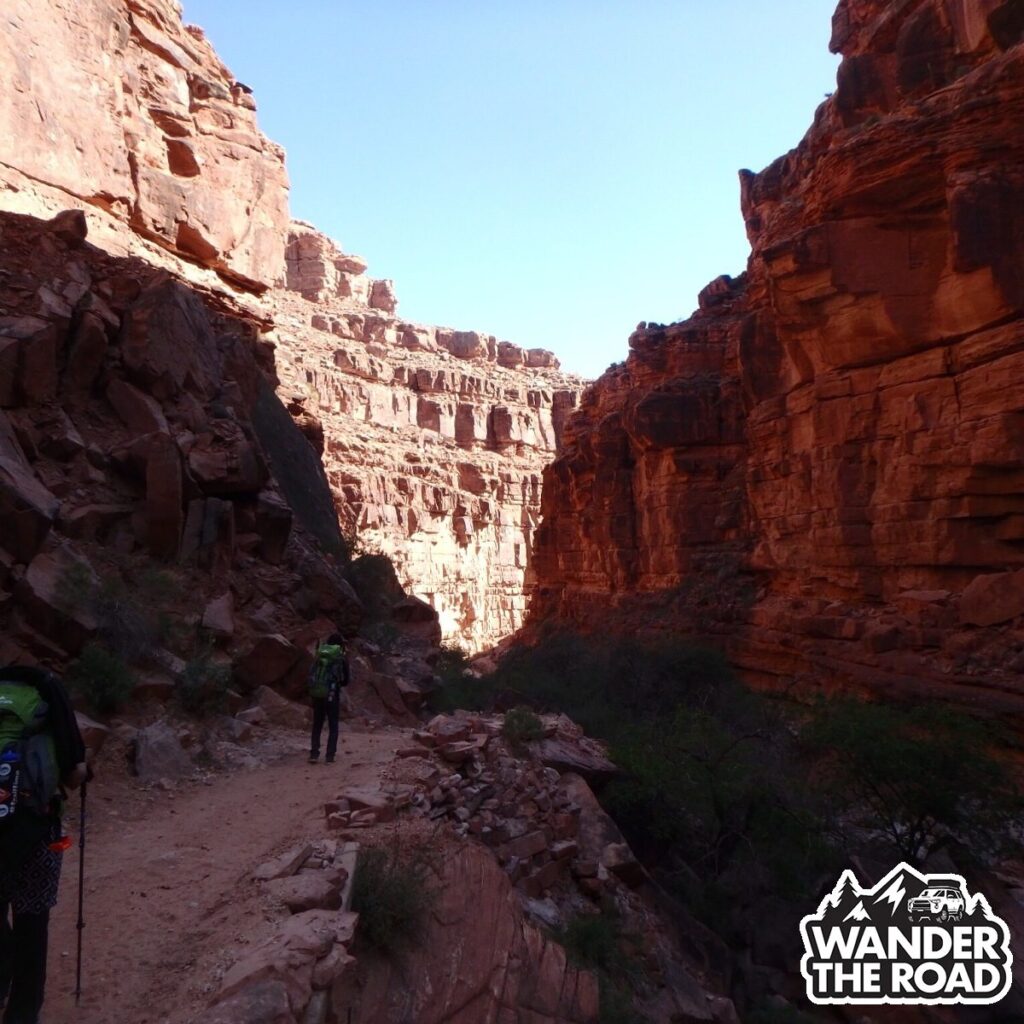
The next morning, before the sun had fully cleared the canyon rim, Rozanne and her son showed up bright eyed and ready to go. Ten miles down into the Grand Canyon stood between us and Havasupai Falls. The descent started with switchbacks, and somewhere near the bottom we passed a ranger who told us, with a straight face, that we had made it to the bottom and could now start over, only eight more miles to go.

We walked through narrowing canyon walls, past rock formations I had no real words for, until the village of Supai finally came into view. Houses and small horse corrals sat tucked right into the canyon walls. At the tourism office, two women worked behind a glass counter, handing out wristbands and collecting fees as fast as people could line up. Down in the village we stopped at the cafe, where I ordered a club sandwich so big I could barely finish it.
Arriving at the Falls
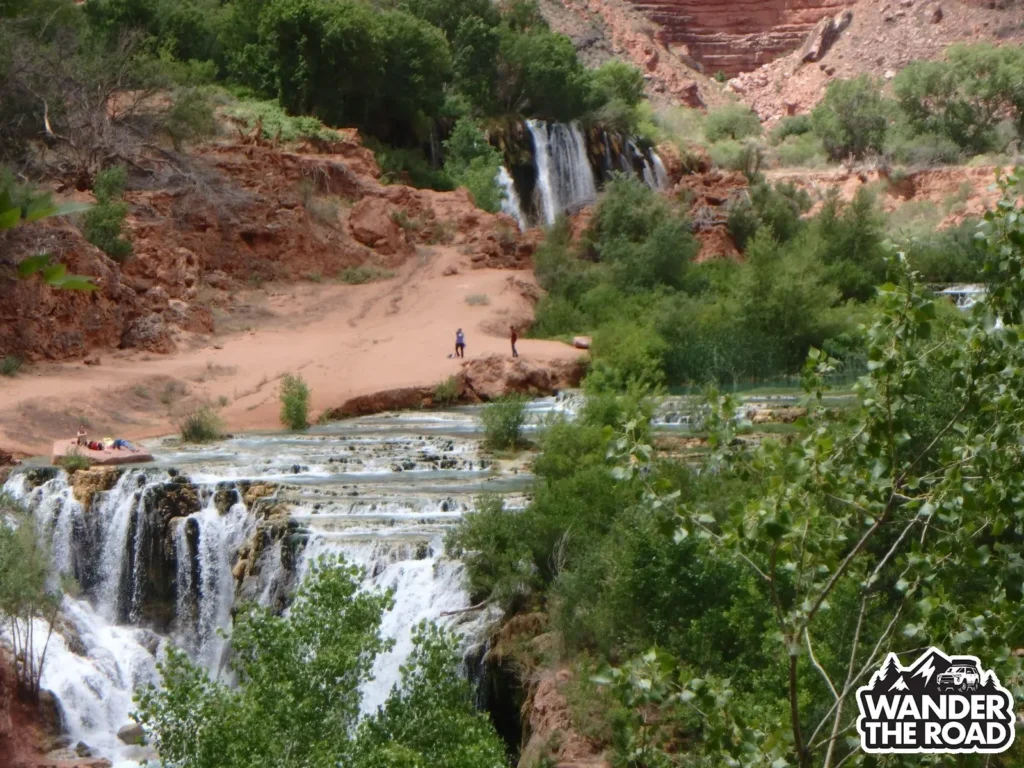
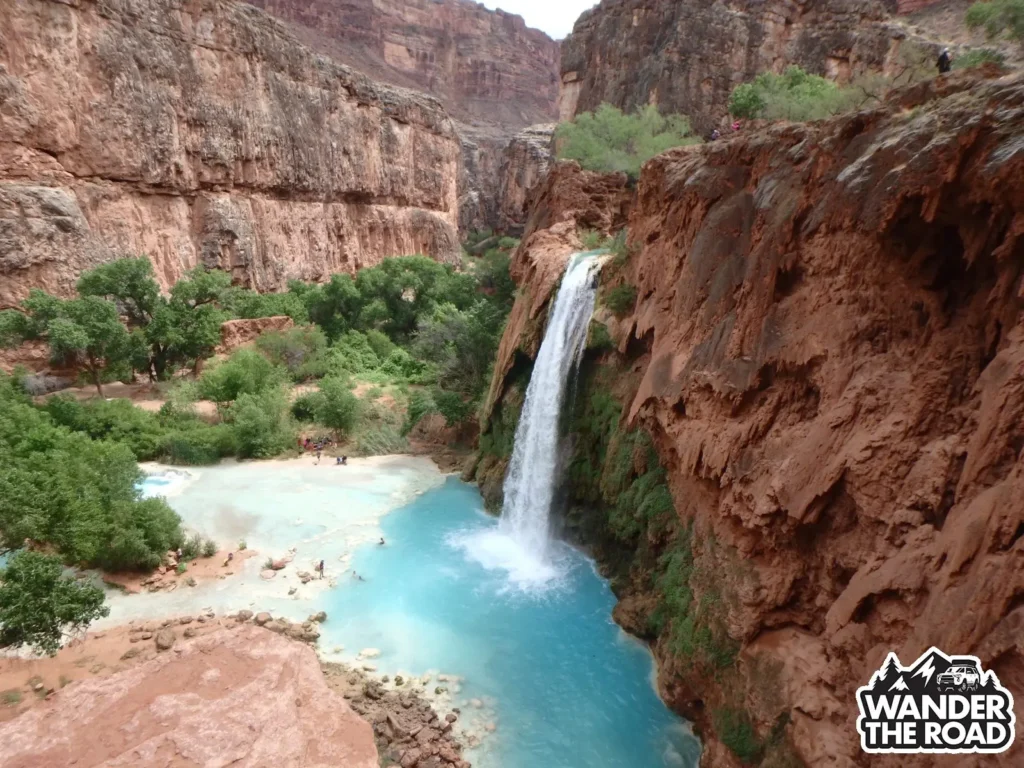
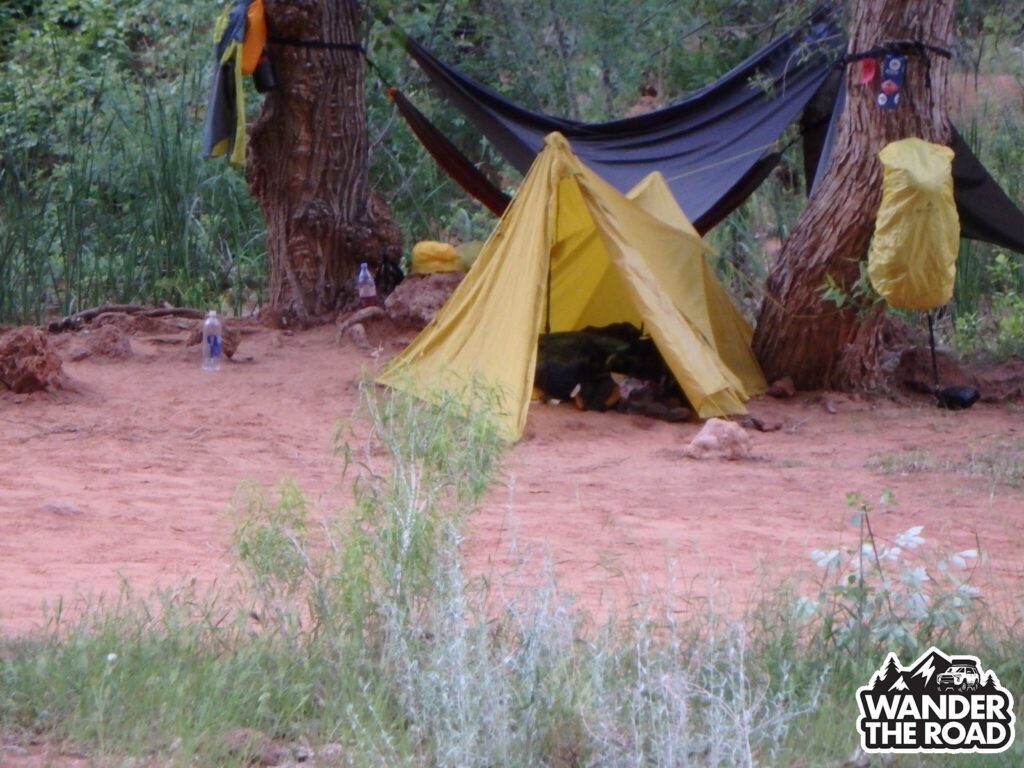
And then the falls started showing themselves. Little Navajo Falls first, with its strange and beautiful formations. Then deeper in, Havasupai Falls itself, the one that ends up on every postcard and Instagram feed associated with this corner of the Grand Canyon. We found an empty spot along the trail, set up camp, Rozanne and her son in hammocks, me under a tarp shelter, and spent the next day just being there.
How Getting a Havasupai Falls Permit Has Changed
Here is the part that has been sitting with me. Getting a Havasupai Falls permit in the first place was its own ordeal even back then. Rozanne had landed hers by calling a phone line over and over, hoping someone would pick up before the season filled. There was no website, no account to log into, no early access window, just persistence and luck. Once you were in, the process on the ground was almost casual by comparison. The ranger station was a canopy with a folding table under it. You showed your wristband, answered a few questions, and that was that.
These days the whole thing runs through an online reservation system with tiers and early access fees, a mandatory three night minimum, and a price tag north of four hundred dollars a person. Permits disappear within minutes of going on sale. The Tribe has had to professionalize the entire operation because the volume of people wanting in is nothing like what it was in 2015, and the land and the people who live there need real infrastructure to handle that, not a phone line and a folding table.
I do not say any of that as a complaint. If anything it tells you how much that place deserves the trip. But it does mean the version of getting there that I had, the busy signals, the persistence, the not quite knowing if you had made it in until someone finally answered, does not exist anymore either. The destination is still there. The way you earn your way to it has changed completely.
What Stays With You
I think that is true of a lot of places we fall in love with early. They do not stay the way we found them, and they are not supposed to. The systems around them grow up to match the attention, and what is left for the rest of us is the memory, and the chance to tell someone else what it took to get there before everything changed.
I do not have a tidy lesson to wrap this up with. I just know that ten years later I can still hear the wind rocking the Jeep at that trailhead, and I can still picture the moment the canyon walls opened up and the blue-green water of Havasupai Falls came into view for the first time. Some trips only happen once, even if the place is still standing exactly where you left it.
Has a place you loved changed so much since your visit that you almost do not recognize it anymore?
Photos From My Trip


Keep Exploring
If this post brought back your own adventure memories, here are a few more stories and places worth exploring on Wander the Road.
- 20 Years Later – Day One: The Road to the Grand Canyon
- There and Back Again – A Trip Up North
- Kennedy Space Center – Where History and the Future Meet


