
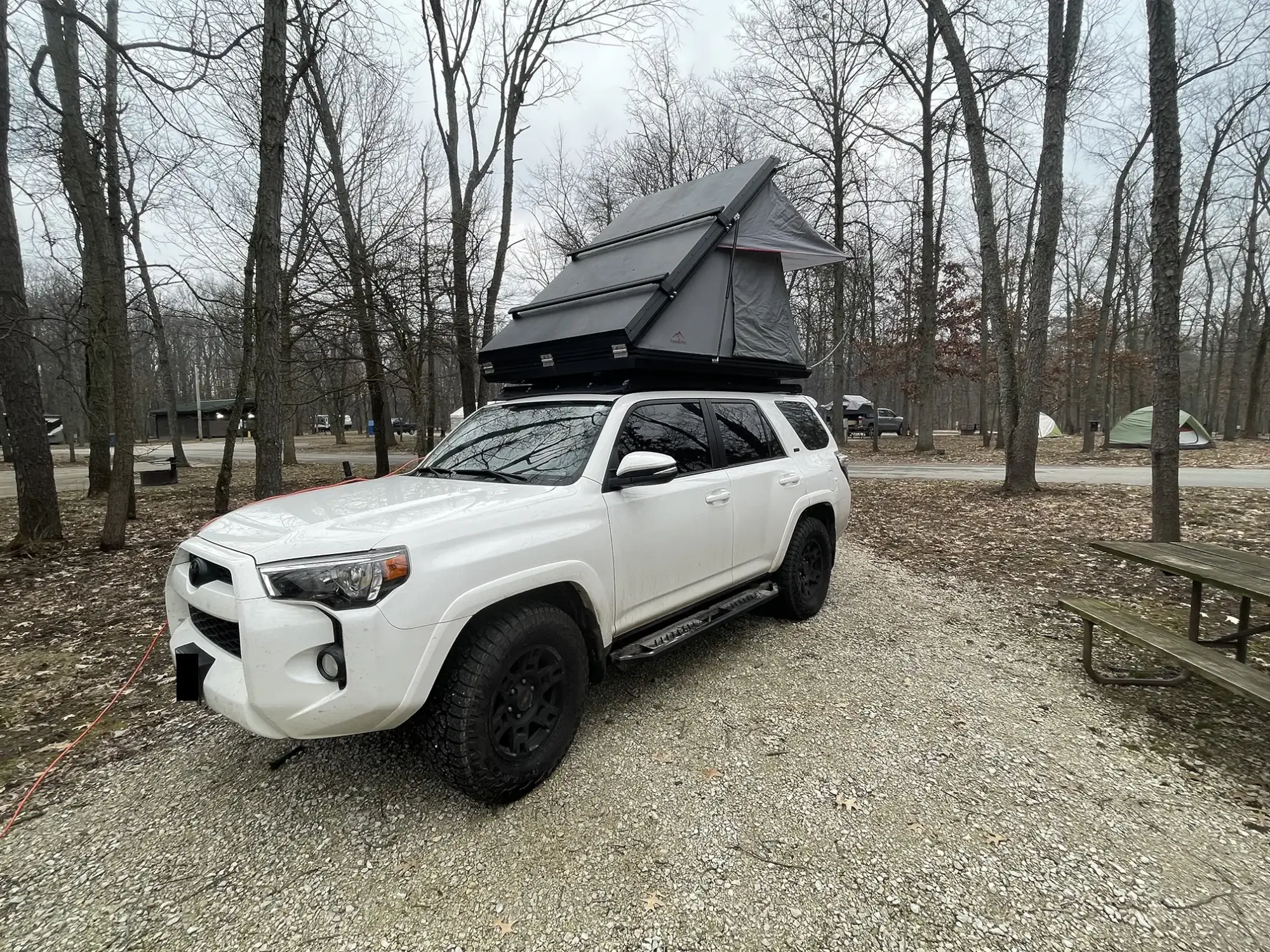
A rooftop tent changes how you camp. Instead of finding flat ground, setting up a tent in the dark, and sleeping on whatever is under you, you park, climb the ladder, and you are done. The bed is already made. For anyone who spends time overlanding or car camping in remote areas, the right rooftop tent makes the whole operation faster, more comfortable, and significantly more flexible about where you can stop for the night.
The catch is that there are several distinct options, and they are not interchangeable. Getting the right rooftop tent depends on your vehicle, your budget, how you camp, and how much you value setup speed versus interior space. Here is what you need to know before you buy.
Rooftop Tent Options: What Is Available and How They Differ
Clamshell Rooftop Tents
Clamshell rooftop tents are made from rigid materials like fiberglass or aluminum. When closed they sit low and aerodynamic on the roof. When you are ready to camp, the top half lifts open and the sleeping platform is already inside. Setup typically takes under a minute.
This is the type I run on the 4Runner. The speed and simplicity of the clamshell setup was a significant factor in choosing it. You can pull into a campsite after a long drive, pop the tent open, and be horizontal in minutes. That matters more than it sounds after a full day on the road.
Pros: Fast setup and takedown, excellent weather protection, compact and aerodynamic profile when closed, more resistant to theft and wildlife access than fold-out options.
Cons: Heavier than fold-out options, more expensive, limited headroom compared to fold-out tents that pitch higher.
Fold-Out Rooftop Tents
Fold-out rooftop tents are made from weather-resistant fabric and fold open from a compact stack into a full tent, usually on a hinge or series of poles. They have been around longer than clamshells and remain popular because they are significantly less expensive and offer more interior headroom when fully pitched.
The tradeoff is setup time. A fold-out tent typically takes five to fifteen minutes to set up and the same to take down, depending on the design. In good weather that is not a big deal. In rain, wind, or cold, it is more of an issue. Most fold-out designs also require more roof space than a clamshell in its closed position.
Pros: Less expensive than clamshells, more interior space and headroom when pitched, lighter weight, compatible with annex additions for extra living space.
Cons: Longer setup and takedown time, less protection in extreme weather, generally not as secure as a clamshell when closed.
The Inflatable Option
Inflatable rooftop tents are the newest category in the market. Rather than a rigid shell or folding fabric over poles, the structure is supported by inflatable beams that you pump up when you arrive at camp. They are lighter than clamshells and set up quickly, but they are a different proposition in terms of durability and long-term reliability.
This is still an emerging option and the long-term track record is thinner than with clamshells and fold-outs. They tend to sit at a higher price point despite the lighter construction, and a puncture or valve failure in the field is a more significant problem than a torn fabric panel. Sites like Overland Journal regularly review emerging RTT options with long-term testing and are worth checking before purchasing in this category.
Pros: Lightweight and compact when deflated, fast setup, comfortable sleeping surface.
Cons: Less proven durability compared to clamshell and fold-out designs, generally more expensive, inflation can be challenging without a good pump, field repairs are more complex.
Annexes and Add-Ons
An annex is not a standalone option but an add-on that extends from the base of a rooftop tent, creating additional ground-level space beneath or beside the tent itself. Depending on the design, an annex can add a changing room, gear storage area, or a covered space to cook or sit in when the weather is not cooperating.
Some annexes include walls and floors. Others are more like awnings with sides. They attach to the tent and ladder and can significantly increase the livability of a rooftop tent setup without requiring a second shelter.
Pros: Flexible additional space for multiple purposes, relatively easy to attach and remove, adds privacy and weather protection at ground level.
Cons: Adds weight and bulk to the overall setup, increases time required to set up and break camp.
How to Choose the Right Rooftop Tent
The decision comes down to a few questions. How much time do you spend setting up and breaking down camp? If you move frequently and stop for single nights, a clamshell is going to serve you better than a fold-out. If you tend to stay in one place for multiple nights, the setup time of a fold-out matters less and the extra interior space becomes more appealing.
Budget is the other major factor. Clamshell tents start higher and can go considerably higher depending on brand and construction. Fold-out tents cover a wider range and there are solid options at more accessible price points. Inflatable tents currently sit at a premium for what they offer.
Before buying any rooftop tent, verify that your roof rack is rated to handle the static and dynamic weight of the tent plus the people sleeping in it. This is a step that gets skipped and it matters. The post on vehicle roof rails and weight limits covers exactly what you need to know before committing to a purchase, including the difference between static and dynamic load ratings. Read that first. And if you want to see how a specific rooftop tent setup comes together on a 4Runner, the 4Runner overlanding setup post covers that build from start to finish.
Read reviews from people who have used the tent in conditions similar to where you will be camping. Talk to other overlanders. And buy from a company with a return or warranty policy that gives you some recourse if something goes wrong. A rooftop tent is a significant investment and worth taking the time to get right.
For more on building out an adventure rig, browse the Adventure Rig Tips archive.


